
In my previous post, I examined the crisis of road fatalities in Guyana through an academic lens, focusing on leadership failures using The Fifth Discipline and its articulation of systemic dysfunctions within organisations. I argued that the persistence of this crisis reflects not only ineffective policy responses, but also deeper organisational learning disabilities. Since that post, there have been numerous other accidents resulting in at least ten fatalities. The problem on Guyana’s roads is not a random occurrence, but the predictable outcome of deeper systemic, cultural, and behavioural failures. In this follow-up, I explore how cultural attitudes and a growing substance abuse problem have transformed Guyana’s roads into sites of profound danger.
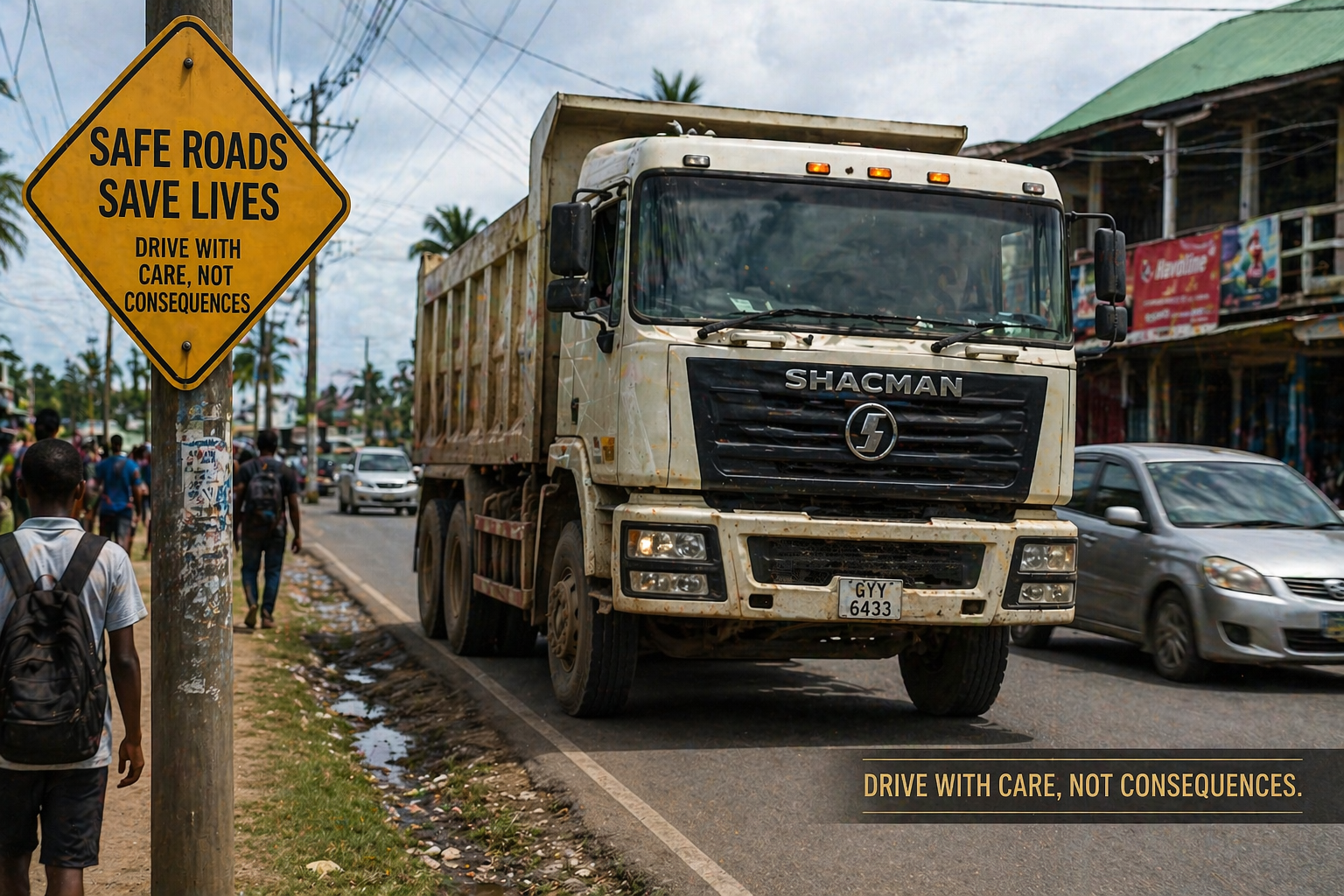
AI generated image
Last year, I spent seven weeks in Guyana. During that time, I travelled beyond the boundaries of Linden on only three occasions. The first was a trip to Georgetown to collect items I had purchased. Afterwards, I went to the airport to receive two colleagues visiting Guyana for the first time to support a literacy programme I conduct. The second journey was to a store on the East Bank of Demerara, after which I immediately returned to Linden. The third, undertaken the day before my return to the United States, was to visit friends in the city. My limited travel was not due to a lack of desire or opportunity, but rather a deep and persistent fear of Guyana’s roads. That fear is not irrational. Having lived for the past fifteen years in a society where systems largely function, where accountability is expected, and where institutional responses to crises are reliable, I have been socialised into a set of expectations that are diametrically opposed to the realities of Guyana’s road culture. This is not to suggest that the United States is without flaws. However, when systems in the US fail, mechanisms for recourse exist through the justice system, emergency response, and access to high-quality medical care.
In Guyana, the uncertainties are pervasive and unsettling. What happens when an accident occurs? Who responds? How long does it take for emergency services to arrive? What level of care is provided to victims? Too often, untrained onlookers attempt to render assistance, sometimes exacerbating injuries. In the moment between impact and intervention, outcomes are not only determined by the crash itself, but by the absence of reliable systems.
As if in competition for the title of most inefficient and unreliable, the medical care available to most is often subpar, a result of substandard training in some cases, inadequate equipment, a laissez-faire attitude, and, at times, a lack of empathy. The care provided at private hospitals is more reliable. However, it is at a cost most Guyanese cannot afford. It is a case of “who gah money gah bargain.” Not to be outdone, the legal system often fails to administer justice in a timely fashion, thereby prolonging the pain and suffering of the bereaved, while those with money or influence are often shielded from the full weight of the law. I reiterate: “who gah money gah bargain.” These failures do not exist in isolation. They reflect a broader system in which inequality, weak enforcement, and institutional inconsistency shape behaviour across society.
There is another serious issue contributing to the horror show that is life on Guyana’s roads: the use and abuse of drugs, alcohol, marijuana, molly, crack, and others. While in Guyana last year, I witnessed an incident that underscored the urgency of this crisis. A group of individuals, many of whom were visibly intoxicated, became embroiled in a heated confrontation, during which one party threatened violence against the other. After a prolonged exchange, the situation de-escalated, and the groups dispersed. What followed, however, was alarming. One individual, falling-down drunk, entered the cab of a truck and sped off.
He was drunk behind the wheel of a truck. The implications are chilling.
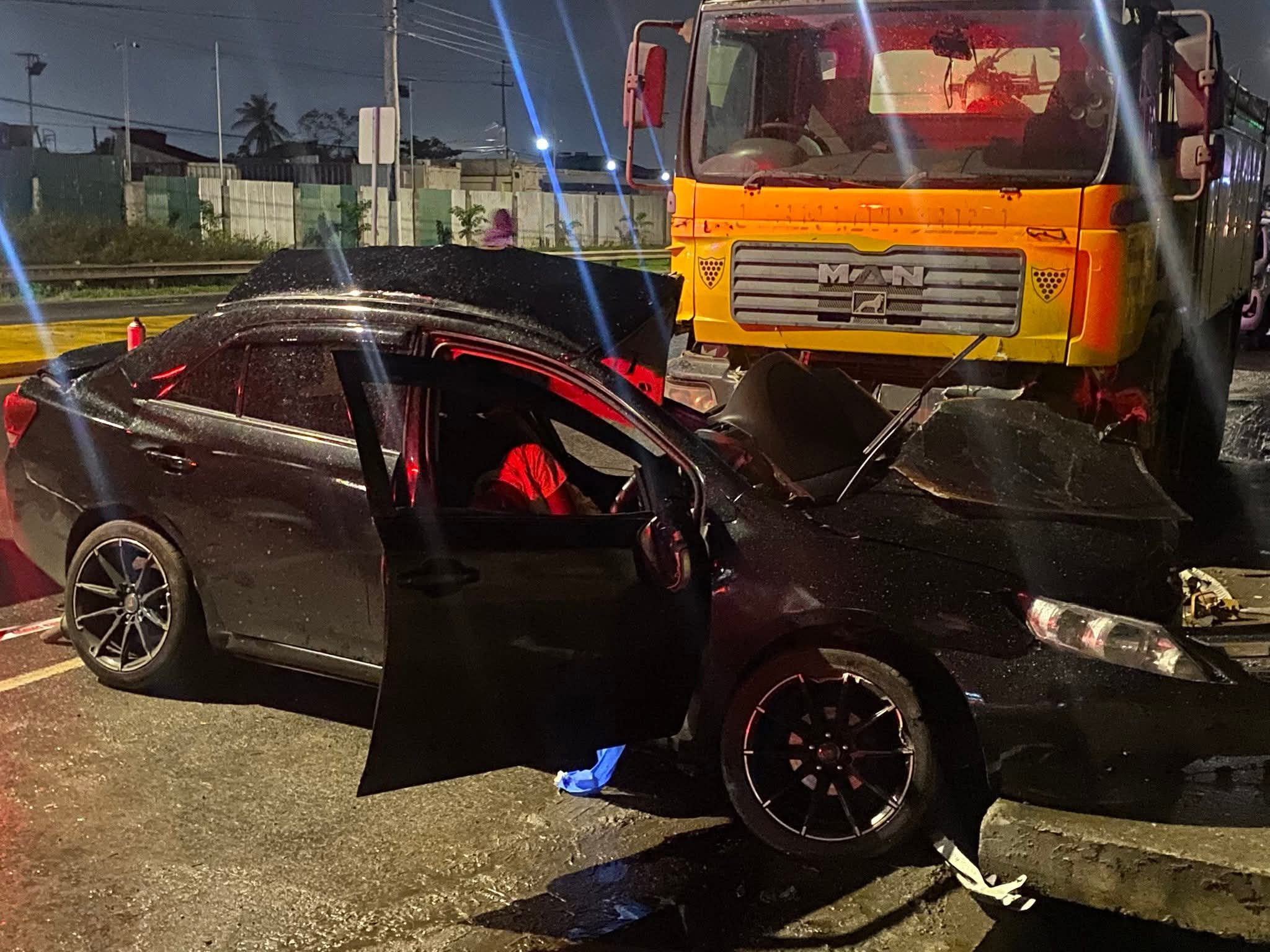
Facebook Photo
This incident is not an anomaly. It reflects a broader cultural tolerance for behaviours that, in other contexts, would be considered unacceptable. Many truck drivers operate with the belief that others should yield to them, confident that the size of their vehicles shields them from serious harm in the event of an accident. This mindset, rooted in power, entitlement, and disregard for human life, continues to shape how some drivers approach the road. Compounding the issue is the fact that some are licensed to drive trucks after only a few years of experience and without proper training. Throw drugs and/or alcohol into the mix, and the likely result becomes not merely possible, but inevitable.
In contrast, obtaining a commercial driver’s license in the United States requires extensive training, assessment, and demonstrated competence. Drivers are prepared not only to operate vehicles, but to do so with care, caution, and an understanding of the potential consequences of their actions. In Guyana, however, there is little evidence that similar levels of rigour are consistently applied. The ongoing construction boom has increased demand for truck drivers, and it is plausible that systems are being bypassed to meet that demand. Within this context, unsafe practices such as drinking and driving are not merely individual choices; they are socially tolerated behaviours embedded within a broader cultural and socio-economic framework.
So too is drug use. Marijuana and molly are fashionable. Our young people are strung out on these substances. These are the same individuals who get behind the wheel of vehicles. They are operating without inhibition, without sound judgement, and often without the requisite skill and training needed to navigate the road safely. In a system where enforcement is inconsistent and consequences are negotiable, impairment becomes not only dangerous but socially permissible.
Yet even these factors do not fully explain the crisis.
Safe driving requires more than technical competence. It requires what the Guyana Police Force often urges in their road safety campaigns: the five Cs: care, caution, consideration, courtesy, and common sense. While these are essential elements of driver education, they are values that should be inculcated long before an individual ever sits behind the wheel of a vehicle. Driver education should reinforce these values, not introduce them.
What becomes evident is something far more troubling: a diminished regard for the human condition and a decided lack of empathy. This indifference manifests itself across multiple facets of Guyanese life, but nowhere does it reach a more terrifying conclusion than on the nation’s roads. What is perhaps most shocking is the seeming indifference that epitomises the collective response. Road fatalities have become an accepted norm. Our people have become desensitised.
I recall remarking to an acquaintance that Guyana might, paradoxically, have been better off with its former network of potholed roads. Those conditions forced drivers to slow down. While that reality created its own set of challenges, it did not produce the same scale of loss of life we are now witnessing. Progress, in this instance, has outpaced responsibility.
And that is the crux of the issue.
We have modernised infrastructure without modernising behaviour. We have increased access without increasing accountability. We have placed more powerful machines in the hands of individuals who have neither the training nor the disposition to operate them safely.
If this reflection feels disjointed or circular, it is because the situation itself is both. The issues are numerous, deeply interconnected, and resistant to simple explanation. Culture feeds behaviour. Behaviour reinforces culture. Weak systems enable both. Substance abuse intensifies risk. Indifference sustains it. Each thread leads to another. And so we arrive, once again, at the same outcome.
Road fatalities in Guyana are not accidents in the truest sense of the word. They are predictable. They are produced. They are the inevitable result of a system, cultural, institutional, and moral, that has normalised risk, diluted accountability, and devalued human life. Until those underlying conditions are confronted, nothing will change. And the roads will continue to lead, not to progress, but to a terrifying conclusion.
You can support the work we do by contributing to our GoFundMe. This fundraiser supports Reading Workshop in Guyana, a literacy development programme aimed at increasing engagement with complex texts and love for reading. Click on the link to contribute.

 rootsandeduculture