WINNERS, APOLOGISTS, AND APOLOGIES

This blog usually reflects on culture, education, and community. I seldom write directly about politics, not because politics is unimportant, but because my focus has always been on how people live, learn, and carry culture forward. Still, there are moments when remaining silent feels uncomfortable.

The recent general election in Guyana is one such moment. What unfolded is more than a political story; it is a cultural and civic one, with consequences for trust, governance, and national life. In writing this commentary, I do not claim the authority of a political scientist. Instead, I offer the perspective of a citizen and an observer, one who cares about the integrity of democratic practice and the implications of leadership, or its absence, on our society.

Supporters at a WIN campaign rally. (Photo taken from WIN’s Facebook Page (fair use)

Initial results from the general election confirmed what I expected: the People’s National Congress (PNC), fronting through the A Partnership for National Unity (APNU) coalition, has been humbled in its own strongholds and replaced as the main opposition by the newcomer We Invest In Nationhood (WIN) party, led by businessman Azruddin Mohamed. The People’s Progressive Party (PPP) is poised to return to office with an anticipated 36 seats. But this is not a story of the PPP victory. It is the story of the PNC’s collapse. That collapse was hastened by a toxic combination: David Granger’s unconstitutional holdover after the successful 2018 No Confidence Motion, Nigel Hughes’s controversial half-plus-one theory, and Aubrey Norton’s failure to inspire and expand the party’s reach. In a political landscape where Indo-Guyanese outnumber Afro-Guyanese, and where voting patterns often align with those identities, the PNC’s path to office has always depended on winning crossover Indo-Guyanese votes. Recent events drove those very voters back into mistrust.

From Fatigue to Collapse

The PNC has long carried the weight of suspicion, particularly among Indo-Guyanese who believe the party manipulated elections in the past. Yet by 2011, PPP fatigue was evident. Its presidential candidate, Donald Ramotar, secured only a minority government, a warning sign that its dominance was waning.

By 2015, frustration with the PPP gave rise to an “anything but PPP” wave, sweeping APNU (under Granger and major coalition partner the Alliance For Change (AFC) into office. For a moment, it appeared to be the PNC’s opportunity for renewal and rebranding, a chance to rehabilitate its image. Instead, it marked the beginning of a decline.

Granger’s Legacy

The turning point came in 2018, when the PNC lost a no-confidence motion. Rather than calling elections within three months as the Constitution required, the administration held on. That decision deepened mistrust, not only among Indo-Guyanese but across the political spectrum. It signaled a willingness to bend democratic norms for survival, an error from which the PNC never recovered.

Hughes’s Legal Detour

What prompted that holdover was the utterings of a man many might have perceived as a legal luminary. Attorney-at-Law, Nigel Hughes, advanced the half-plus-one argument, insisting that 34 votes were required to carry the motion in Guyana’s 65-member National Assembly. To support this, he cited two cases, including the case of Kilman v Speaker (Vanuatu, 2011), where an explicit “absolute majority” in a 52-member House required 27 votes, not the 26 that were cast.

The principle in both countries is the same: an absolute majority means a majority of all members. But the arithmetic differs. In Guyana’s Assembly, half of 65 is 32.5, so the absolute majority is 33. In 2019, the Caribbean Court of Justice (CCJ) affirmed this plainly, calling the “34 votes” claim “wholly untenable.” Questions about Hughes’ legal acuity and integrity arose.

Aubrey Norton: The Missed Opportunity

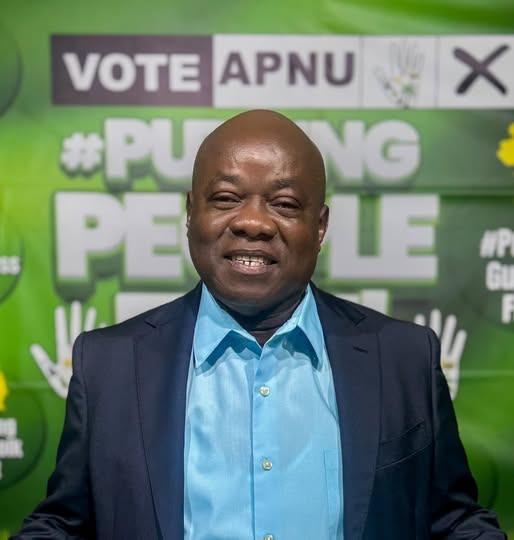
Aubrey Norton (Photo from APNU Coalition Facebook Page (fair use)

After Granger’s 2020 defeat at the polls and the legal shenanigans that delayed the transfer of power, shattering what little faith remained in the PNC’s willingness to relinquish office, political journeyman Aubrey Norton, surly and uninspiring, inherited a party already fragile, fractured, and desperately in need of healing and a new direction. Instead of broadening the coalition or courting sceptical voters, Norton’s leadership was marked by defensiveness and insularity. His aloofness and inability to inspire disenchanted Afro-Guyanese supporters or win over Indo-Guyanese sceptics left the party further adrift.

In a context where building trust was essential, Norton projected grievance. Where the party needed bridge-building, he deepened divides. He was not the architect of revival; he became the final weight dragging the PNC down.

The Vacuum and WIN’s Emergence

Between Hughes’s legal contortions, Granger’s unlawful extension, and Norton’s uninspired leadership, the PNC left a vacuum. Into that space stepped WIN, a party barely months old, led by a businessman burdened with allegations of gold smuggling and tax evasion. By conventional wisdom, WIN should have been a nonstarter. Yet it became the main opposition, making inroads in PNC territory. This was not necessarily the product of political genius; it was the product of perfect timing.

The Politics of Opportunity

Azruddin Mohamed’s rise underscores a lesson familiar in both business and politics: opportunity is everything. Disillusion had deepened into desperation. Indo-Guyanese, shaken by the PNC’s handling of the no-confidence motion, had no interest in it. Afro-Guyanese, uninspired by Norton, were restless. The PPP was still mistrusted by some. In that triangle of fatigue, mistrust, and disenchantment, WIN found its opening.

A New Era or a Gamble?

Whether WIN represents a fresh alternative or a dangerous gamble is still uncertain. A sanctioned businessman now occupies the mantle of opposition, not because of a singular vision or credibility, but because Guyana’s main opposition failed.

Apologists and Apologies

Explanations and justifications will continue: misread constitutions, questionable precedents, or claims of bias. But the facts are clear. The CCJ settled the arithmetic. The Constitution settled the process. The electorate settled the rest. The 2025 elections will not be remembered for PPP victory, but for PNC collapse.  Hughes’s flawed reasoning, Granger’s unlawful extension, and Norton’s failure of leadership combined to gift the role of opposition to a political novice.

For that, they owe their supporters not excuses, but apologies.

Click on the links below to purchase copies of my book, Legends Of The Black Water, or to support the causes we hold dear (Shamari’s GoFundMe). Thanks for your support. Please like and subscribe.

LEAP, Reading Workshop and Transformative Learning

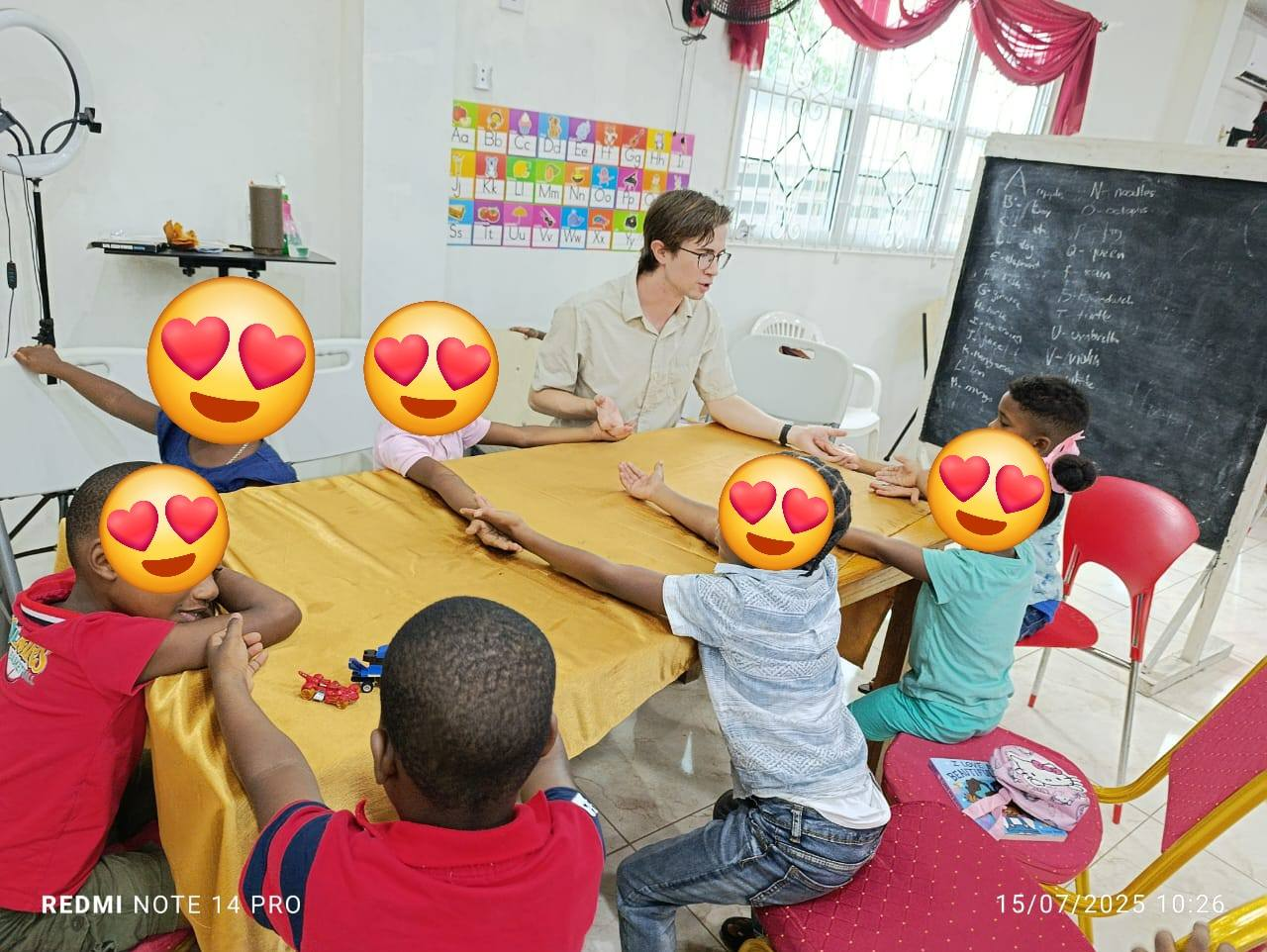
Educators meet in circles to reflect on the day’s events.

In July, Literacy Educators As Partners (LEAP) concluded its highly successful second annual Summer Reading Workshop in Linden, Guyana, a one-week initiative designed to enhance literacy skills and foster a love for reading among young learners. This year, the workshop attracted over 50 children from the Amelia’s Ward area.

The Summer Reading Workshop 2025 aimed to improve reading comprehension and vocabulary skills while encouraging critical thinking through research-based strategies, skill-building workshops, and creative activities. Held for five hours each day, this interactive program provided participants with a comprehensive educational experience designed to empower them as lifelong readers and thinkers.

A Transformative Approach to Literacy Education

One of the primary goals of the workshop was to bridge the gaps in literacy education often created by rote learning methods and passive reception of information. In place of these outdated approaches, the Summer Reading Workshop introduced a transformative model, focusing on literacy practices that empower students to think critically, engage creatively, and develop a genuine love for reading.

This initiative wasn’t only for students. Teachers in attendance were equipped with new skills and competencies through professional development, ensuring that the impact of the workshop would extend beyond the week-long event. Teachers will take these transformative strategies back to their classrooms and school communities, inspiring future generations of learners to engage with reading in meaningful ways.

Building a Strong Foundation for Success

Every participant in the Summer Reading Workshop 2025 received a backpack filled with school supplies, along with daily snacks to ensure they were prepared and motivated for active participation. This support ensures that each child is set up for success as they approach the upcoming school term. These resources, alongside the engaging activities, created an environment where young learners felt safe, nurtured, and inspired to expand their reading horizons.

Additionally, the workshop’s approach mirrored the Ministry of Education’s mission to foster a literate and empowered society in Guyana, aligning with national educational goals and contributing to the sustainable growth and development of the country.

Beyond the Workshop: LEAP’s Ongoing Impact

LEAP is a group of dedicated educators with shared roots in Linden, Guyana, and a passion for both education and community development. Since its inception in 2014, LEAP has focused on a variety of initiatives aimed at improving literacy in Linden, such as:

  • Teacher Training Workshops: Equipping educators with research-based techniques and resources to enhance classroom instruction.
  • Book Donations: Expanding access to diverse and enriching reading materials for students.
  • School Supplies Donations: Ensuring students have the tools they need to succeed in school.
  • Reading Workshops: Creating opportunities for young learners to develop a love for reading and to enhance their literacy skills.

Encouraged by the success of these initiatives, LEAP’s founding members are now working towards formally registering the organization as a nongovernmental organization (NGO). This will allow LEAP to scale its programs, reach more children, and continue transforming literacy education in Linden and beyond.

Gratitude and Acknowledgments

The success of the Summer Reading Workshop 2025 would not have been possible without the generous support of numerous individuals and organizations. Special thanks go out to:

Lindiwi Benjamin, Collis Augustine, Petal Davis, Hyacinth Gibbs, Keith Manifold, Aretha Cameron, Gina Louis, Marcelle Goodchild, Jennifer Cusick, Dylan Singh, Stay Allen, Naudia Pellew, Louise Mac Cloud, Dr. Lequita Pryce-Tappin, Virgil Estwick, Arlene Gravesande, Chaka Langevine Casey, Morris McKinnon, Elizabeth Conde, Dionne Leonard, James Burke, Nathan Larsen, Daniel Vitali, Brian McCormack, Yani Santana, Daniel Filipak, Peter Maiwald, Keith Walcott, Valerie Smith, Lin-Jay Harry-Voglezon, Olivia Belgrave, Dr. Gillian Richards-Greaves, Shaundell Blege, Jeffrey Gill, and Orin Charles.

We would also like to express our gratitude to the anonymous donors, who contributed $200, $140, and $50 to the cause, and to the management and staff of e-Magic Inc, the principal and staff of Lyons Community School in Brooklyn, NY, Dr Robin Pestano, and several local leaders and volunteers. These include: Mayor of Linden, Sharma Solomon, Regional Chairman #10, Deron Adams, Regional Councillor, Wainwright Bethune, Jenelle Grant, Sephra Ebron, Kerensa Kitt, Jedidah Wilkinson, Rueshell Noble, Andre Walker, Roxanne Noble, Pastor Stanley Haynes, Jeneisa Massiah, Latoya McPhoy Allicock, Odetta James, Shelisa Mason, and Nicola Green.

Looking Forward

As Literacy Educators As Partners moves forward, the Summer Reading Workshop 2025 stands as a testament to what can be achieved when dedicated educators and community members come together with a shared purpose. It truly takes a village. We look forward to the village coming together again in 2026 to continue this mission.

Let’s also come together as a village to support Shamari Cyrus. Shamari is an aspiring lawyer with a dream to make a significant impact in the legal field. A graduate of the University of Guyana with an LLB degree, Shamari’s journey to becoming a practising attorney is one step closer as she has been accepted into the prestigious Hugh Wooding Law School in Trinidad and Tobago. However, like many pursuing higher education, the financial burden of completing this final stage of her legal education presents a significant challenge. Coming from a single-parent home, Shamari faces difficulty in covering the high costs associated with law school. But with determination, passion, and the support of her community, she is ready to push forward on her path to success.

This is an opportunity for us to contribute to the growth and development of a deserving member of the Linden community. By supporting Shamari, we are not just helping an individual; we are investing in the future of our legal system and society. Shamari’s success will not only empower her but will also inspire others in Linden and beyond to pursue their dreams, no matter the obstacles.

Let’s make a difference in Shamari’s life and contribute to the future of our community. Click on the link to contribute to Shamari’s GoFundMe campaign and help her take the next step toward becoming the attorney she aspires to be.

https://gofund.me/bd01825d

Anomie, Social Degradation And Molly

Support this page and the other work that we do by purchasing copies of Legends of the Black Water or purchasing from amazon.com via this associate link (earns commission).

I was born in the bauxite mining community of Linden, Guyana. Although I now live in Brooklyn, New York, “mih nable string bury in Linden”, plus, “ah eat labba and drink creek water”. Linden is in my blood. So I return every chance I get. I view giving back to the community that raised me as not just an act of love but also an obligation. I want to retire to Linden, hopefully in a place that is much better than it was when I left. Unfortunately, that might not be possible. 

Linden is dying, and too many of us are watching it happen in silence.

This year, when I returned—just one year since my last visit—I was devastated by the sheer speed and severity of the decline. The signs of decay were not just present; they were glaring. Yes, the crumbling infrastructure and chaotic disorganisation in Central Mackenzie are troubling, but what truly unsettled me was the invisible plague—more pervasive than potholes, more destabilising than disarray. I’m talking about the quiet epidemic eating away at our community from within. I’m talking about drug use, particularly among our young people. I’m talking about Molly.

(from cnn.com – fair use)

It seems as though everywhere I turned, teenagers and young adults are “zombied out”—glass-eyed, staggering, mumbling, detached from reality. Molly (methylenedioxymethamphetamine or MDMA), often cut with toxic fillers, is not just a recreational drug; it is a psychological and neurological time bomb. Its use is linked to long-term memory loss, depression, psychosis, and even death. But in Linden, its use has become normalised.

I raised my concerns with several people around the community, including a few officials. I was met in some cases with unawareness, excuses, or worse—denial. One resident told me he goes to bed early and isn’t affected by it. I smiled, not from amusement, but frustration. This is NIMBYism—“Not In My Back Yard”—at its most dangerous. Because eventually, it becomes NIMBY reversed: “Now In My Back Yard.”

Then I was given some data and horror eclipsed even frustration. Recent reports indicate that over 800 young people in Linden were treated for mental health issues related to drug useat the Mackenzie Hospital alone. That number is not just alarming; it is catastrophic. And let us not pretend these are isolated cases. These are the ones who made it to the hospital. What of those who didn’t? Who are quietly slipping through the cracks?

This is a full-blown public health crisis.

Sociologist Émile Durkheim once posited that communities under strain experience anomie—a breakdown of norms and social cohesion. That’s what Linden is facing: a collapse of shared values, discipline, and vision. Young people aren’t just bored or unemployed—they are untethered. They lack community, purpose, and protective structures.

Where are the social workers? Where are the youth mentors? The PTAs, the social clubs, the music lessons, the sports clubs, the church youth groups? Where are the spaces for creativity and growth?

We cannot continue to point fingers at the government while doing little to restore the moral and social fibre of our own backyard. Yes, government policy matters, and systemic neglect is real—but community silence is complicity.

AI-generated image.

And here’s the paradox: opportunity exists. Linden is no longer the jobless shell of the 1990s and early 2000s. Job opportunities have increased. Construction is booming. Yet, I struggled to purchase concrete blocks because all the block yards were short-staffed. Why? Because, as one vendor told me bluntly, “The boys dem ain’t coming to work. Dem deh in drug yard blowing molly.”

There was a time when the biggest challenge was a lack of opportunity. Today, the challenge is a lack of will, and perhaps a lack of vision. Lindeners have an opportunity to build wealth, maybe not at the scale we might desire, or at the pace enjoyed by other groups, but the opportunities are real and present. Sadly our youth are squandering them by investing time, effort, money, and indeed their future in drug use..

Where are the kitchen gardens that once fed our homes and souls? Where are the clubs that once gave us pride and purpose? I remember belonging to the Circle Tennis Club, where we built discipline, friendship, and community. You were too engaged to go astray. Today, our young men are idle, alienated, and being devoured by addiction.

In 1989, psychologist Urie Bronfenbrenner described human development as shaped by nested systems: family, peers, school, community, culture. When all these systems fail, a child collapses. When they all work together, a child soars. Linden’s systems are failing.

Let me be clear: this is not a condemnation! It is a call to action. The degradation in our community is alarmingly real. We cannot afford another year of denial, of sleepwalking into disaster. We need to revive community leadership, develop grassroots programs, reclaim our public spaces, and mobilise every sector—faith, education, health, business, sports, and culture—to save our youths.

Let’s not wait for a generation to be lost before we act. Let Linden rise, not by accident or nostalgia, but by intention, effort, and care.

Support this page and the other work that we do by purchasing copies of Legends of the Black Water or purchasing from amazon.com via this associate link (earns commission).

Legends Of The Black Water

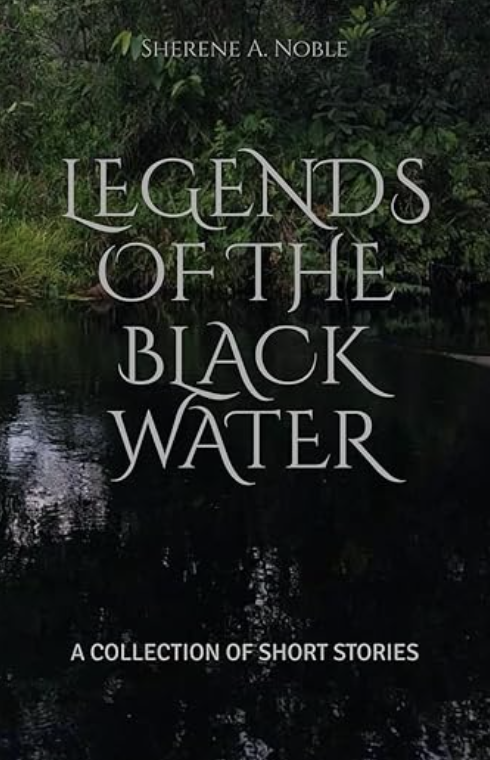
Legends of the Black Water is a haunting collection of short stories that weave together Caribbean folklore, ancestral memory, and supernatural dread. From a mother’s visions after her son’s disappearance to a malevolent spirit igniting fires no one can quench, these tales reveal how the past clings to the living—and how belief can transform fate. Each story is steeped in the rich cultural tapestry of Guyana, offering a window into a world where the river never forgets.


If you love fiction that lingers, these stories will stay with you long after the last page. Here’s why Legends of the Black Water deserves a place on your shelf:

Authenticity:
These aren’t recycled ghost stories. They’re rooted in real cultural beliefs and folklore passed down through generations.

Atmosphere:
The writing transports you: humid nights, black rivers, a white horse, and the soft dread that something is always watching.

Relatable Themes:
Grief, guilt, family, faith—every story resonates with the universal struggle between tradition and change.

Diversity in Storytelling:
If you’re craving Caribbean voices and narratives outside the mainstream, this collection offers something fresh, bold, and unapologetically original.

Perfect for Book Clubs:
Each story sparks questions: What do you believe in? What would you sacrifice? How do old stories shape your choices?


Ready to experience something unforgettable?
Pick up your copy of Legends of the Black Water today and step into a world where myth and memory blur—and nothing is ever truly gone.

Social Representation, Baby Skello, And Governance

I stumbled upon Baby Skello’s now-infamous song, which references the Hindu deity Mother Lakshmi in a vulgar and offensive manner. It’s not just disrespectful—it is disgraceful. Listening to it was a jarring experience, not just because of its irreverence, but because it reflects a broader cultural erosion that seems increasingly normalised in popular music.  Much of today’s dancehall music is so riddled with vulgarity and obscenity that I find myself, a genuine lover of the genre, questioning whether some form of censorship is necessary to protect the public from this cultural onslaught.

I’m not here to judge anyone’s musical tastes; to each his own. I enjoy dancehall. I love soca and calypso. And let’s not pretend these genres have not flirted with risqué content. The Mighty Sparrow was the king of double entendre. Even our beloved Dave Martins and the Tradewinds released an album that was banned from the airwaves for tracks like Motor Car and Woman in Love. So yes, art can be provocative, playful, and even edgy. 

But what I’m grappling with is the role of government in promoting what amounts to cultural degradation. A line must be drawn when the state—the highest custodian of national values—appears to actively promote art that undermines the very cultural and moral fabric of the society it claims to represent. When figures like Vybz Kartel of “Good Like Jesus” fame, are given pride of place at national events, or when artists like Spice—of “Skin Out Yuh Pum Pum” notoriety—are invited to headline Independence celebrations, the state is no longer a passive observer of cultural shifts. It becomes an active participant in the dilution of cultural integrity.

Culture, as anthropologists remind us, is not merely the sum of our music, dance, and festivals. It is the complex web of beliefs, practices, values, and symbols that shape collective identity. It permeates education, governance, interpersonal relations, and nation-building itself. As such, the symbolic choices of government—who it honours, who it platforms, and what it celebrates—have a profound impact on the social consciousness. Pierre Bourdieu’s concept of habitus helps explain how these cues shape people’s perceptions of what is normal, acceptable, and aspirational. Similarly, Social Representation Theory posits that ideas become entrenched in public consciousness through discourse, media, and shared institutions. In other words, what the government promotes becomes what the society internalizes.

There is also a more practical consideration: the question of sovereignty. How does it serve the purpose of national independence to import foreign acts to headline our most symbolically significant celebrations? The irony is striking. I am not aware that any other nation celebrates its autonomy by outsourcing the soundtrack of its freedom.

President Ali hosts Vybz Kartel at State House (Image courtesy President Irfaan Ali Facebook)

Admittedly, some artists may not fully understand the cultural or religious implications of their work. In the case of Baby Skello, it might be unfair to assign full blame if he lacks the educational or cultural sophistication to recognize the harm such choices can cause. But national leaders, by contrast, have a responsibility to demonstrate discernment. Their actions set the tone for the broader society. Leadership entails not just policy but symbolic guidance. I recently saw a video of an ordinary Jamaican citizen calling out President Ali for endorsing Vybz Kartel. When it reaches that level, when even non-Guyanese are publicly questioning our leadership’s choices, you know the problem has hit rock bottom.

What is perhaps most disheartening is the seeming resistance to constructive critique. Public discourse is often mischaracterized as political hostility rather than as an opportunity to reflect and recalibrate. But a healthy democracy thrives on dialogue, especially when it concerns cultural integrity and national identity and the government would do well to embrace it.

The embrace of vulgarity and spectacle in spaces meant for reflection, pride, and unity is not just a cultural oversight—it is a political failure. If we are to preserve the soul of the nation, then those entrusted with its stewardship must rise to the task of protecting, not prostituting, our culture.

Baby Skello has since issued an apology. It is now the government’s duty to adjust its posture to guide its citizens toward a path that does not lead to cultural degradation. If the Ethnic Relations Commission (ERC) sees it fit to sanction Baby Skello, then consistency demands that it also issues a stern reprimand to the Government of Guyana. After all, it has actively embraced and promoted artists who are equally—if not more—guilty of vulgarity, irreverence, and cultural insensitivity. Accountability must not stop at the artiste. It must reach those who have the power, influence, and responsibility to set the standard.

Hit like and subscribe to receive more content.

Purchase from Amazon.com through this link to support this page. https://amzn.to/4kzxgea (Earns Commission)

Grab your copy of Legends of the Black Water – a collection of short stories by Sherene Noble

“Curry Goat”

This story is from my new collection of short stories titled “Legends of the Black Water“. Click on the link to purchase the full collection. Enjoy the read.

Support this page by making purchases via https://amzn.to/43cesL0 (Earns Commission)

“Me, Mr Rogers? Me?” Mildred protested, clutching her chest with exaggerated offense. “I would never do a thing like that!”

Mr Rogers gave her a long, contemptuous look before continuing in his low monotone, “If I lose another goat, is hell to pay. Don’t mek me sin me soul, yuh hear?”

“Is threaten you threatening me, Mr Rogers?” Mildred bristled, hands on her hips. “I never tief—”

Mr Rogers sucked his teeth, turned his back on her, and hobbled away on his spindly, uneven legs, disappearing into his yard.

Mildred stood rooted to the spot, mouth agape, her face contorted in rage. She wheeled around, ensuring her voice carried far enough for the neighbours to hear.

“But de idiocity[1] of this man, eh? Who de ass want tief he dry-up, deh-bad[2] goats? And is who he threatening anyway? He dry-up just like he blasted goats! He think he could beat me or anybody fuh me? Talking bout don’t mek he sin he soul!” She sucked her teeth loud and long.

With an indignant flounce, she stormed back to her little shack, but the moment she stepped inside, her frown melted into a mischievous grin.

“Tief he goats?” she scoffed, shaking her head as she latched the door behind her. “I tek[3] de goats! How dare they come in me yard?”

The truth is the goats never actually entered her yard. They would stretch their necks over the fence to nibble at the lush tomato plants Mildred had strategically planted close to the fence. A perfect trap. If no one was home at the Rogers’ house when a goat came a-nibbling, she—or her son, Milroy—would seize the opportunity. The moment the goat’s head dipped over the fence, they would grab it, maa-ing and all, yanking it into their yard.

A sharp thump to the head rendered the creature unconscious. Within minutes, it was dragged behind the bathroom, where it was swiftly gutted, cleaned, and prepared for a sumptuous meal of Curried Goat.

Milroy, as always, had the final task: sneaking out in the dead of night to dump the bucket of entrails into the gully at Blueberry Hill, where the community discarded their refuse.

The Blueberry Hill Bridge over the old train line.

Mildred’s husband, Robert, never participated in these little rituals.

In fact, he hated it. He really didn’t feel comfortable about his wife and stepson stealing the Rogers’ goats but no matter how many times he grumbled his disapproval, Mildred and Milroy continued their goat-stealing ways.

Sometimes, to protest, he would reject his plate outright, but this only served to infuriate Mildred and set off a storm of nagging that could last a whole week. And truly, there is nothing worse than a week of wife’s nagging—not even eating tiefing curry goat.

So, after a while, he gave in. He ate the damn goat.

It wasn’t that the taste was bad—hell, Mildred was an excellent cook. But it was the principle, man. Still, what was principle against a week of relentless pecking?

*     *     *

Mildred wasn’t a thief, she constantly assured herself. It was just that sometimes things were brown[4] in her household—money was tight, and the goats provided a few days’ worth of good food for what otherwise would be hungry bellies.

And really, she couldn’t understand why that damn pretentious Robert was ‘mekkin styles’[5] about eating the goat—as if he was providing any better! If he was working every single day and bringing home money every single week, like other men in the community—like Mr Rogers, for example—then she wouldn’t have to do this!

Look at how Mr Rogers provided for his family. He worked hard. He made sure they had nice clothes, new curtains every Christmas, fresh paint on the house—all the things Mildred could only dream of.

And the worst part? Mr Rogers was stingy. Every Christmas, he would butcher a cow and several goats, and not once had he sent a single scrap of beef or goat meat her way.

“But how people could stay suh, eh?”[6] Mildred fumed.

She, on the other hand, was generous.

As poor as she was, she would send a slice of black cake over to Sandra next door, or exchange Christmas goodies with Hyacinth across the road.

But the curry goat?

Never. That was a secret she was not about to share.

Besides, the Rogers were too damn uppity.

Mildred, Robert, and Milroy lived in a tiny wooden shack, pieced together with old boards and zinc sheets they had scavenged from around the community. But the Rogers lived in a fancy two-story house, with real glass windows they would peer through—watching, judging.

They never spoke to anybody in the neighborhood.

Except for Ms Wilson.

Oh, she was good enough for them. Living in her big house at the corner, with her children sending English pounds from London like money was nothing.

And the Jones family. Rich enough to have a shop, a garage, and two motor cars parked in front of their two-story house—like they were some kinda royalty.

But the rest of them? They weren’t good enough for the Rogers. That’s why Mr Rogers never shared Christmas meat. That’s why they looked down on everyone.

 And that’s why Mildred didn’t feel bad.

“No, that Mr. Rogers was too damn greedy and bigshaust[7] wid heself. Leh he tek duh fuh thinking he better than people!”

So, every now and then, one of Mr Rogers’ goats disappeared.

*     *     *

Mr Rogers sat in his living room, staring through the window into Mildred’s yard.

He knew.

He had never actually seen Mildred or Milroy stealing his goats, but he knew. Goat after goat had disappeared, and every single time, within hours, the savory aroma of curry and spices drifted into his house. Mocking him!

 Then came the final straw.

His only ram vanished. Now, how was he supposed to breed his nanny goats? How was he supposed to make a few extra dollars?

It was bad enough that he had to worry every day about paying the mortgage at the end of the month without having to worry about his stock disappearing. The meat and milk sales were a lifeline—he was already a month behind on his mortgage, and now this? He couldn’t afford to lose any more animals. So Mr Rogers decided to talk to Mildred about the goats. But that bumptious, brazen woman lied to him in his face.

That’s it! He was done talking.

The next morning, Mr Rogers caught the 5:30 a.m. Tata bus to Georgetown. He told no one where he was going.

When he returned late that night, a brown crocus bag was slung over his shoulders.

His hobble was heavier now, his steps more uneven under the weight of his burden. He said nothing. Under the perfect cover of darkness, he went straight to the goat pen. He emerged a few minutes later with a sly look on his face. As if by command, the air grew thick and sour. Dogs barked at shadows. Lamps flickered without breeze.

*     *     *

A few days later, Mildred spotted a goat reaching over the fence, chomping lazily on the leaves of her five-finger tree. Her heart leapt.

She glanced at the Rogers’ house.

Shut tight.

Everyone was at work or school.

This was her moment. Free reign!

Mavis crept toward the five-finger tree. The goat munched happily, oblivious to the danger it faced. Just as she had done countless times before, Mildred lunged, grabbing it by the horns and yanking it over.

The goat made no sound.

With practiced skill, she strangled it, dragged it inside, and in no time at all, it was gutted, cleaned, and seasoned.

Mildred chuckled.

“Oh lawd! Curry goat!”

*     *     *

When Robert returned home that evening after a long, fruitless day of searching for work, a feast greeted him.

Curried Goat, steaming hot.

The aroma filled the tiny shack, rich and tantalizing, but instead of making his mouth water, it made his stomach turn.

Because it wasn’t just Curried Goat sitting on the table. It was a reminder of his failure. How did Mildred not understand? How did she not see what this meant? Did she really think he was okay with the fact that she had to resort to stealing to put food on the table? He wished she were a bit more contented.

It’s not like he wasn’t trying. Every day, he joined the long line of men outside the bauxite company, waiting, hoping to get a day’s work. Sometimes, he was lucky to be hired as a casual worker for a few weeks at a time. When that happened, things were nice for a while. Even a casual bauxite worker could earn enough to make life a little easier.

But then, there were the bad times—when weeks turned into months without a job, when he had to hustle odd jobs just to keep them afloat.

And Mildred?  Instead of understanding, she wanted more. She wanted Mr. Rogers’ life—the big house, the glass windows, the Christmas meat.

Maybe one day, when he got a permanent position, they could finally build something real, something like Mr. Rogers’ house.

But until then—

“Why can’t she just bear she chafe[8]?”

Tonight, he would take a stand. He wasn’t eating that flipping curry goat. Not even if she vex ‘til Christmas morning.

*     *     *

Across the yard, Mr Rogers got a whiff of a delightful curry emanating from Mildred’s house.

Everyone in his household was waiting for him to erupt, to storm over to Mildred’s shack and raise hell but for the first time, a goat was missing and Mr Rogers didn’t seem to care.

Instead, he chuckled—a deep, low sound from his throat.

His wife looked at him in surprise.

He smiled, a slow, knowing smile. “Is rass to pay[9] wid me and dem.” He thought.

 But he said nothing.

*     *     *

Mildred woke up the next morning to a strange, oppressive gloom draping the room like an unseen, grey blanket.

Something was off.

A lingering unease clung to her, but she shook it off, dismissing it as morning grogginess. She rose from bed, unwrapped her nightclothes, grabbed her towel, and stepped outside.

The bathroom, a rickety wooden structure, sat in the backyard, its flat roof patched together from discarded zinc sheets. A piece of black conveyor belt covered the dirt floor, a simple fix to avoid standing on the brown sand that made up the terrain.

She turned on the standpipe. Crystal-clear water gushed into the bucket.

She dipped her calabash scoop, lifted the cool water to her skin, and poured it over herself.

Ecstasy.

Mildred closed her eyes, savoring the refreshing chill of the water against her heated skin.

Then she opened them. And screamed. The bathroom walls warped before her eyes, shifting, bending—moving.

Goats. Dead goats. Their twisted faces, frozen in grimaces of agony, emerged from every crack and crevice in the tilting structure. Their eyes—milky, lifeless—bore into her.

Mildred’s screams tore through the morning air, raw and desperate.

Inside the house, Robert and Milroy jerked awake.

Within seconds, they were outside, faces etched with confusion as they found Mildred, naked, dripping wet, pointing wildly at the empty air.

“Help me!” she screeched, but the last word choked in her throat before she could force it out.

She saw it then. A single goat broke from the pack—cantering forward, its vacant white eyes fixed on Milroy.

“Run, Milroy!” she shrieked.

But he didn’t move. Didn’t flinch. Didn’t even blink.

The goat charged—and then, impossibly, disappeared into his body.

Milroy’s expression remained unchanged. Like nothing had happened.

Then there was silence. The goats were gone. All gone.

Mildred’s breath came in ragged gasps as she frantically searched the space around her.

“Deh just been hay. Deh just been hay, ah tell yuh[10]!”

But Robert and Milroy only exchanged uneasy glances.

And then—

They looked at her.

Not with concern.

With amazement.

Mildred took a shaky step forward.

Something wasn’t right.

Their expressions—why did they look like that?

“Wait—y’all ain’t believe me?” she demanded, eyes darting from one to the other. “One just run into you, Milroy! You didn’t feel it? I ain’t crazy!”

Robert and Milroy remained frozen, staring at her as though she were a stranger.

Then, Milroy opened his mouth—

And bleated.

Robert’s entire body tensed. His head snapped toward Milroy. Did he just—? The sound was wrong. Not human.

Robert took a slow, staggered step backward, heart pounding. Something was very wrong.

“Is wha wrong with you?” Milroy asked.

Only—

It wasn’t words. It was a goat’s bleat. A distorted, guttural maa, slipping through his lips as natural as his native tongue. As if he had no control over the sound.

Robert’s eyes bulged. His stomach turned to ice. Slowly—too slowly—he turned to look at Mildred.

Her mouth quivered. Her lips hung slack, trembling, as if she were forgetting how to shape words.

Her eyes—bloodshot red—fixed onto his. She reared back. Rooting her feet into the ground.

A cold shudder raked down Robert’s spine.

Is whuh going on hay?” he wondered, fear making his knees wobbly. Robert didn’t know if he could trust his own ears or eyes. He stared at Mildred and Milroy in stunned confusion. His frightened look seemed to aggravate Mildred.

For a split second, he was frozen.  And that was all Mildred needed.

With a violent lurch, she charged—head down, barreling into his stomach with brute force.

A deep, sickening thud echoed through the yard as Robert’s body lifted off the ground.

He hit the dirt hard. But he landed on his feet. And—he ran.

Ran for his life.

His mind reeled, thoughts jumbled, frantic.

The curry goat. Yesterday. Did it have anything to do with this? Had it cursed them? Robert hadn’t eaten it. But both Mildred and Milroy had.

Mildred had gloated about how delicious it was and had mocked him for being such a jackass to waste good food. And she had laughed at him for refusing. Now something told him it was a good thing that he refused.

He had heard stories about this place, Linden.

A place full of strange happenings. But could it be—? Was it possible—?

He didn’t stop running. He never even looked back.

*     *     *

Mr Rogers had watched it all from behind his curtained window.

His sharp eyes followed the chaos unfolding in Mildred’s yard—her transformation, Milroy’s maa-ing, Robert’s frantic escape.

And slowly a smirk curled his lips.

He’d bet his bottom dollar there would be no more curry goat smells wafting from that yard to his. He turned from the window with a curious expression on his face.

*     *     *

No one knows for sure what happened to Mildred and Milroy. But everyone agrees that it had something to do with Mr Rogers’ goats.

No one in the black water community ever heard from Robert again. But from Mildred and Milroy, they heard plenty. Because for years, until they finally died, the two of them wandered through the streets—eyes red. Vacant. Muttering to themselves.

And sometimes—

When the night was quiet, and the moon was full—

They would stop in the middle of the road, throw their heads back— and bellow into the darkness.

“Maa! Maa! Maa!”

_____O_____


[1] Colloquialism for audacity

[2] In a poor state

[3] take

[4] Difficult financially

[5] Showing reluctance

[6] Why are people like that?

[7] Hifalutin

[8] Endure hardship without complaining.

[9] A variation of ‘hell to pay’.

[10] They were just here, I’m telling you.

Validation, Memorization, and Common Entrance – Part 2

That article took an opinion-based approach, looking at the immediate effects of these practices on students’ lives. In this second part, we will explore the issue through the lenses of Cognitive Load Theory and Developmental Theories to understand how those extended learning hours contribute to cognitive overload, reduce meaningful learning, and ultimately prove counterproductive.

Cognitive Load Theory: A Brief Overview

Extended Learning Hours and Germane Cognitive Overload

Germane load is essential for effective learning. However, extended instructional hours—which for many Guyanese students includes regular class hours, afterschool lessons, homework, and at-home studies that add up to as many as twelve hours daily—impose excessive germane cognitive demands on students. While the intention is to reinforce knowledge through repetition, the duration and volume of study sessions force students to engage far beyond their cognitive limits. As a result, rather than building knowledge structures, students experience cognitive overload, where their capacity to process information effectively is diminished. 

The Risks of Developmentally Inappropriate Instruction

Aligning Instruction with Developmental Needs

References

Cohen, L. J. (2016). Jean Piaget’s theory of cognitive development. In The handy psychology answer book (2nd ed.). Visible Ink Press. https://search.credoreference.com/articles/Qm9va0FydGljbGU6NDIwNjMxMw==?aid=107300

Darling-Fisher, C. (2018). Erikson’s stages of psychosocial development. In The SAGE Encyclopedia of Educational Research, Measurement, and Evaluation (Vol. 4, pp. -). SAGE Publications, Inc., https://doi.org/10.4135/9781506326139

de Jong, T. Cognitive load theory, educational research, and instructional design: some food for thought. Instr Sci 38, 105–134 (2010). https://doi.org/10.1007/s11251-009-9110-0

Dunkel, C. S., & Harbke, C. (2017). A Review of Measures of Erikson’s Stages of Psychosocial Development: Evidence for a General Factor. Journal of Adult Development, 24(1), 58-76. https://doi.org/10.1007/s10804-016-9247-4

Freire, P. (1970). Pedagogy of the Oppressed. Herder and Herder.

Longe, J. L. (Ed.). (2016). Piaget’s theory of cognitive development. In Gale Encyclopedia of Psychology (3rd ed.). Gale. https://search.credoreference.com/articles/Qm9va0FydGljbGU6NDc3MTY4MQ==?aid=107300

Sweller, J. (1988). Cognitive load during problem solving: Effects on learning. Cognitive Science, 12(2), 257–285.

Tindall-Ford, S., Agostinho, S., & Sweller, J. (2019). Advances in cognitive load theory: Rethinking teaching. Taylor & Francis Group.

United Nations. (2015). Transforming our world: The 2030 Agenda for Sustainable Development.

Validation, Memorization, and Common Entrance

For the past two successive years, I found myself in Guyana during the release of the National Grade Six Examination (NGSA) or Common Entrance results—a period charged with palpable excitement and anticipation. The atmosphere is electric, thick with nervousness and exhilaration as teachers, parents, and students await the announcement that will profoundly impact their lives.

In Guyana, these results are more than just academic scores; they are the gatekeepers to future prospects and societal standing. For students who excel, the rewards are substantial. Achieving top marks often means being assigned to one of the country’s most prestigious schools, institutions known for their excellence and the opportunities they afford. These students are celebrated with a level of fanfare that acknowledges their hard work and potential, marking them as future leaders and achievers. The success can transform their academic journey, opening doors to better resources, enriched learning environments, and enhanced future prospects.

For parents, these results are a source of immense pride and validation. A child’s outstanding performance is not just a personal triumph, but also a reflection of the family’s aspirations and sacrifices. It elevates their social standing, often allowing them to bask in the vicarious fulfillment of dreams they may have once held for themselves. The joy of seeing their child succeed in such a visible manner can be a profound, shared victory. Teachers, too, experience a surge of pride and professional validation. The success of their students is a testament to their dedication and pedagogical skills. It boosts their reputation, enhancing their marketability as private tutors. The accolade of producing top-performing students bolsters their professional standing and affirms their teaching methods.

Conversely, the release of poor results can cast a shadow over the future and damage esteem. Students who do not achieve high scores may be placed in less prestigious schools, which can be seen as a setback in their educational journey. These schools may offer fewer resources and opportunities, potentially impacting the students’ sense of self and future academic and career prospects. For parents, this outcome can be a source of disappointment and anxiety about their child’s future. The perceived lack of success can feel like a personal failure, affecting their emotional and social outlook.

In Guyana, the journey toward academic success is marked by an intense and often rigorous level of preparation that begins as early as grade one. From the tender age of seven, children are immersed in a demanding cycle of extracurricular lessons, setting the stage for what will become an all-consuming quest for academic excellence. By the time students reach grades five and six, this behavior is entrenched. The joy of childhood seems to wane as they become caught in a relentless academic grind. They navigate their days burdened by backpacks so heavy they might as well be hauling around miniature houses. The pressure to excel transforms their school experience into an onerous regimen rather than a time of learning and growth.

One parent shared with me the astonishing routine for his child, detailing a schedule that began at 4 a.m. with hours of study until 7 a.m. The school day itself stretched from 8 a.m. to 2 p.m., followed by after-school lessons until 5 p.m., and then more study time at home until 9 p.m. All of this was driven by the belief that “She teacher don’t mek joke” (Her teacher does not joke around)—an indication of the serious, no-nonsense approach expected in their education. In response to this, I could not help but express my utter consternation: “Y’all mad!” The sheer ridiculousness and oppressiveness of such a schedule left me alarmed. The balance between nurturing a child’s academic potential and preserving their well-being seemed to be starkly out of alignment.

This level of preparation underscores a cultural expectation that academic success requires more than just effort—it demands a relentless, almost exhaustive commitment. As a result, the childhood experiences of these students are often overshadowed by the pressure to perform, highlighting a profound tension between educational ambition and the need for a more balanced, holistic approach to childhood education and development. NGSA or Common Entrance, as observed through the reactions of teachers, parents, and education officials, seems to serve more as a platform for adult validation than as a tool focused on the actual needs and development of the students. The intense emphasis placed on the results of this exam reveals a deeper issue: it frequently prioritizes the egos and aspirations of adults over the educational growth of children.

What is particularly concerning is the nature of the exam itself. The NGSA primarily measures students’ ability to recall information—a fundamental cognitive skill, but the most basic level of learning. This focus on recall is indicative of a broader issue within the educational framework, where the exam’s design fails to encourage higher-order thinking skills, such as analysis, synthesis, and evaluation. For instance, Paper 1 of the 2022 English assessment consisted of 40 questions, with only one question requiring students to engage in evaluative thinking. The remaining questions predominantly tested students’ ability to remember and apply rules of grammar, punctuation, and spelling. This narrow focus on factual recall and technical details reflects a significant shortfall in fostering critical thinking and deeper understanding.

In essence, the Common Entrance Examination (NGSA) and the preparation for it can be seen as a grand performance that does little to advance students’ cognitive development. It is a high-stakes event that, despite its prominence and the considerable effort invested by all involved, ultimately amounts to “much ado about nothing.” The emphasis on rote learning and memorization fails to prepare students for the more complex and dynamic challenges of higher education and real-world problem-solving. This disconnect highlights a pressing need to reevaluate the examination system and its objectives, ensuring that it serves the true purpose of education: developing well-rounded, critical thinkers who are equipped to navigate and contribute meaningfully to an ever-evolving world.