
This blog usually reflects on culture, education, and community. I seldom write directly about politics, not because politics is unimportant, but because my focus has always been on how people live, learn, and carry culture forward. Still, there are moments when remaining silent feels uncomfortable.
The recent general election in Guyana is one such moment. What unfolded is more than a political story; it is a cultural and civic one, with consequences for trust, governance, and national life. In writing this commentary, I do not claim the authority of a political scientist. Instead, I offer the perspective of a citizen and an observer, one who cares about the integrity of democratic practice and the implications of leadership, or its absence, on our society.
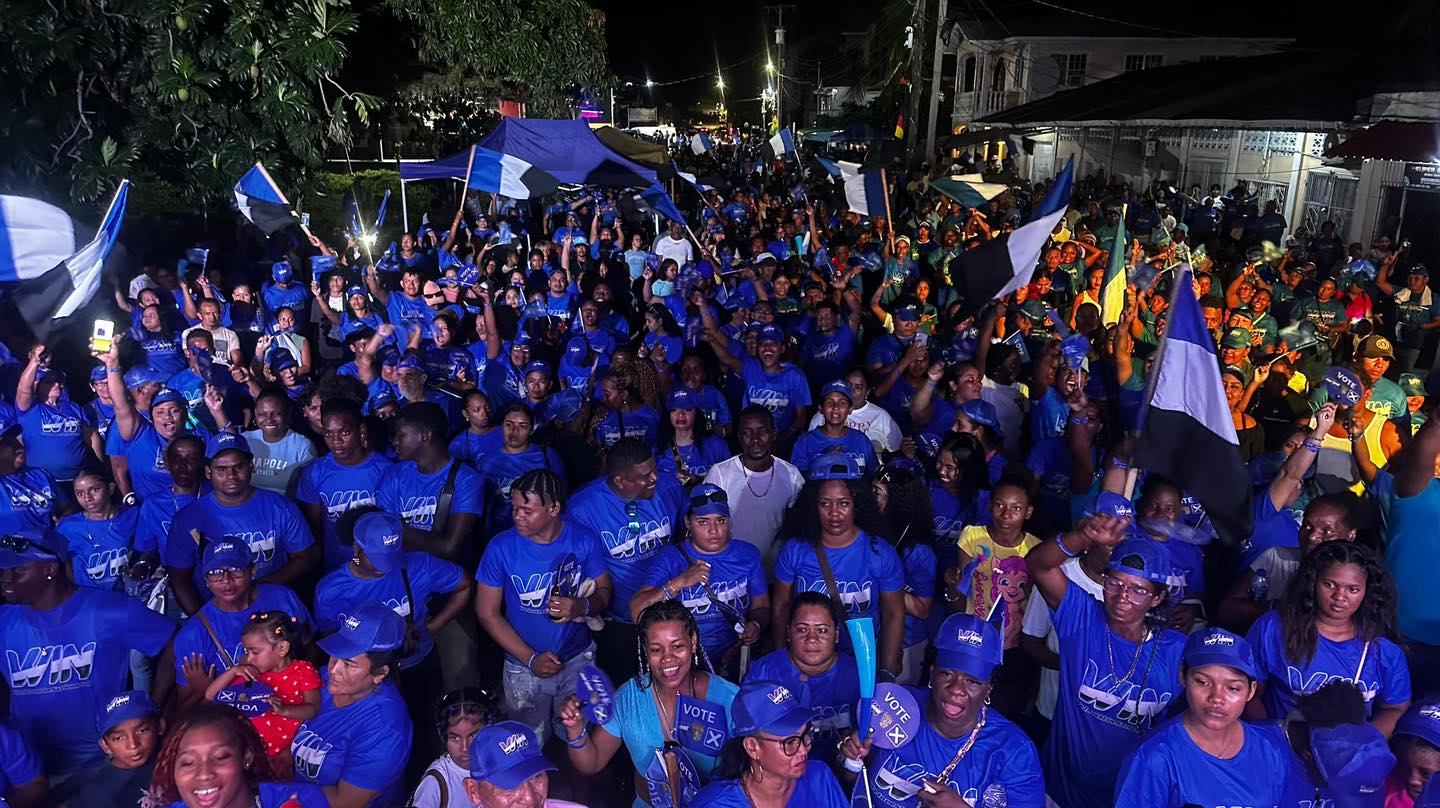
Supporters at a WIN campaign rally. (Photo taken from WIN’s Facebook Page (fair use)
Initial results from the general election confirmed what I expected: the People’s National Congress (PNC), fronting through the A Partnership for National Unity (APNU) coalition, has been humbled in its own strongholds and replaced as the main opposition by the newcomer We Invest In Nationhood (WIN) party, led by businessman Azruddin Mohamed. The People’s Progressive Party (PPP) is poised to return to office with an anticipated 36 seats. But this is not a story of the PPP victory. It is the story of the PNC’s collapse. That collapse was hastened by a toxic combination: David Granger’s unconstitutional holdover after the successful 2018 No Confidence Motion, Nigel Hughes’s controversial half-plus-one theory, and Aubrey Norton’s failure to inspire and expand the party’s reach. In a political landscape where Indo-Guyanese outnumber Afro-Guyanese, and where voting patterns often align with those identities, the PNC’s path to office has always depended on winning crossover Indo-Guyanese votes. Recent events drove those very voters back into mistrust.
From Fatigue to Collapse
The PNC has long carried the weight of suspicion, particularly among Indo-Guyanese who believe the party manipulated elections in the past. Yet by 2011, PPP fatigue was evident. Its presidential candidate, Donald Ramotar, secured only a minority government, a warning sign that its dominance was waning.
By 2015, frustration with the PPP gave rise to an “anything but PPP” wave, sweeping APNU (under Granger and major coalition partner the Alliance For Change (AFC) into office. For a moment, it appeared to be the PNC’s opportunity for renewal and rebranding, a chance to rehabilitate its image. Instead, it marked the beginning of a decline.
Granger’s Legacy
The turning point came in 2018, when the PNC lost a no-confidence motion. Rather than calling elections within three months as the Constitution required, the administration held on. That decision deepened mistrust, not only among Indo-Guyanese but across the political spectrum. It signaled a willingness to bend democratic norms for survival, an error from which the PNC never recovered.
Hughes’s Legal Detour
What prompted that holdover was the utterings of a man many might have perceived as a legal luminary. Attorney-at-Law, Nigel Hughes, advanced the half-plus-one argument, insisting that 34 votes were required to carry the motion in Guyana’s 65-member National Assembly. To support this, he cited two cases, including the case of Kilman v Speaker (Vanuatu, 2011), where an explicit “absolute majority” in a 52-member House required 27 votes, not the 26 that were cast.
The principle in both countries is the same: an absolute majority means a majority of all members. But the arithmetic differs. In Guyana’s Assembly, half of 65 is 32.5, so the absolute majority is 33. In 2019, the Caribbean Court of Justice (CCJ) affirmed this plainly, calling the “34 votes” claim “wholly untenable.” Questions about Hughes’ legal acuity and integrity arose.
Aubrey Norton: The Missed Opportunity
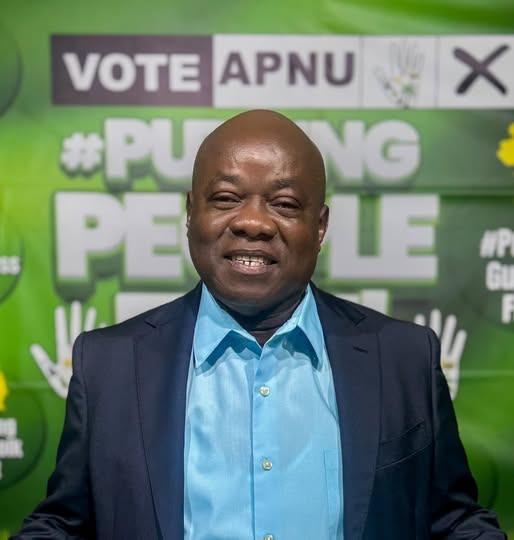
Aubrey Norton (Photo from APNU Coalition Facebook Page (fair use)
After Granger’s 2020 defeat at the polls and the legal shenanigans that delayed the transfer of power, shattering what little faith remained in the PNC’s willingness to relinquish office, political journeyman Aubrey Norton, surly and uninspiring, inherited a party already fragile, fractured, and desperately in need of healing and a new direction. Instead of broadening the coalition or courting sceptical voters, Norton’s leadership was marked by defensiveness and insularity. His aloofness and inability to inspire disenchanted Afro-Guyanese supporters or win over Indo-Guyanese sceptics left the party further adrift.
In a context where building trust was essential, Norton projected grievance. Where the party needed bridge-building, he deepened divides. He was not the architect of revival; he became the final weight dragging the PNC down.
The Vacuum and WIN’s Emergence
Between Hughes’s legal contortions, Granger’s unlawful extension, and Norton’s uninspired leadership, the PNC left a vacuum. Into that space stepped WIN, a party barely months old, led by a businessman burdened with allegations of gold smuggling and tax evasion. By conventional wisdom, WIN should have been a nonstarter. Yet it became the main opposition, making inroads in PNC territory. This was not necessarily the product of political genius; it was the product of perfect timing.
The Politics of Opportunity
Azruddin Mohamed’s rise underscores a lesson familiar in both business and politics: opportunity is everything. Disillusion had deepened into desperation. Indo-Guyanese, shaken by the PNC’s handling of the no-confidence motion, had no interest in it. Afro-Guyanese, uninspired by Norton, were restless. The PPP was still mistrusted by some. In that triangle of fatigue, mistrust, and disenchantment, WIN found its opening.
A New Era or a Gamble?
Whether WIN represents a fresh alternative or a dangerous gamble is still uncertain. A sanctioned businessman now occupies the mantle of opposition, not because of a singular vision or credibility, but because Guyana’s main opposition failed.
Apologists and Apologies
Explanations and justifications will continue: misread constitutions, questionable precedents, or claims of bias. But the facts are clear. The CCJ settled the arithmetic. The Constitution settled the process. The electorate settled the rest. The 2025 elections will not be remembered for PPP victory, but for PNC collapse. Hughes’s flawed reasoning, Granger’s unlawful extension, and Norton’s failure of leadership combined to gift the role of opposition to a political novice.
For that, they owe their supporters not excuses, but apologies.
Click on the links below to purchase copies of my book, Legends Of The Black Water, or to support the causes we hold dear (Shamari’s GoFundMe). Thanks for your support. Please like and subscribe.

 rootsandeduculture